
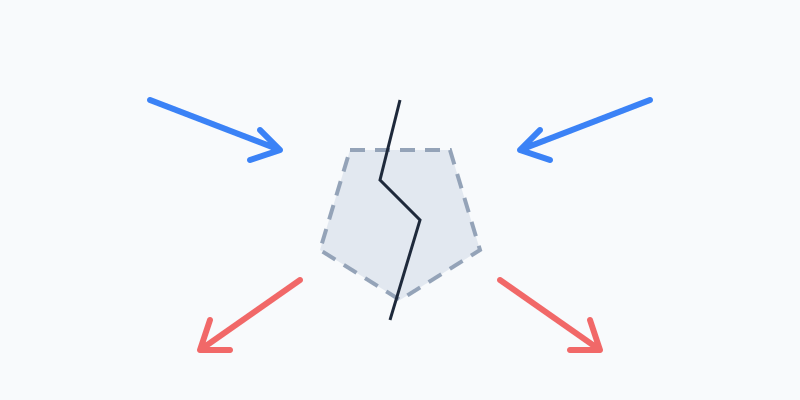
The Paradox of Fearful-Avoidance
Of the four primary attachment styles, Disorganized Attachment (also known clinically as Fearful-Avoidant Attachment) is the most complex, the most painful for the individual experiencing it, and the most volatile within adult relationships. It is characterized by a profound, irresolvable conflict: the simultaneous, desperate craving for intimacy and the terrifying conviction that intimacy will result in pain, betrayal, or annihilation.
To understand the chaotic "push-pull" dynamic of this attachment style, we must first look at its etiology. Disorganized attachment is overwhelmingly rooted in childhood trauma, specifically when the primary caregiver—the biological source of safety and soothing—is also the source of fear. This creates an impossible biological paradox for the child: their instinct is to flee *to* their caregiver for protection, but they must simultaneously flee *from* their caregiver to survive.
The Approach-Avoidance Conflict in Adulthood
In adult romantic relationships, this unresolved childhood paradox manifests as severe approach-avoidance conflict. A fearful-avoidant partner will initially present as highly engaged, vulnerable, and loving (the approach phase, driven by the profound desire for connection). However, the moment true intimacy is achieved, the nervous system registers it as a lethal threat.
The Cycle of Deactivation:
- The Trigger: An expression of deep love, a commitment milestone, or a minor conflict that feels like a precursor to abandonment.
- The Panic (Avoidance): The individual is flooded with anxiety, interpreting closeness as danger. They may suddenly become cold, hyper-critical, or completely withdraw.
- The Regret (Approach): Once distance is established and the threat level drops, the fear of abandonment kicks in. The individual will then aggressively pursue the partner they just pushed away.
This agonizing "I hate you, don't leave me" dynamic is exhausting for both partners. It frequently leads to severe relationship instability, cyclical breakups, and a heightened vulnerability to complex abuse dynamics like Trauma Bonding.
Disorganized Attachment and Infidelity
The fearful-avoidant individual is statistically at a higher risk for engaging in infidelity or becoming involved in affairs. Because the primary relationship feels simultaneously necessary and dangerous, a third party can serve as an emotional regulator. An affair—especially a chaotic or high-risk one—provides a temporary escape from the suffocating pressure of the primary intimacy without triggering the full fear of abandonment, as the primary partner is still "there."
Furthermore, because disorganized individuals struggle with emotional regulation and impulse control during periods of high stress, they are highly susceptible to the intoxicating dopamine rush of New Relationship Energy (NRE) as a numbing agent.
Healing the Fearful-Avoidant Nervous System
Healing disorganized attachment is arguably the most difficult therapeutic journey among the attachment styles because it requires confronting the core trauma that created the paradox. It cannot be healed simply by finding a "secure" partner; the internal alarm system must be recalibrated.
"Healing begins when you realize that your adult partner is not your childhood abuser, and that vulnerability is not a death sentence."
The cornerstone of recovery is Trauma-Informed Therapy. Modalities like EMDR (Eye Movement Desensitization and Reprocessing) and Somatic Experiencing are often more effective than traditional talk therapy because they address the trauma stored in the nervous system rather than just the cognitive distortions.
In relationships, progress requires the fearful-avoidant individual to actively vocalize their internal state. Instead of acting out the panic by fleeing or picking a fight, the clinical goal is to verbalize: "I am feeling overwhelmed by closeness right now, and my instinct is to run. I need an hour to regulate, but I am not leaving you." This builds a bridge of trust over the chasm of fear.
Further Reading & Clinical Resources
To navigate the complexities of trauma and connection, consider utilizing the following tools and articles:
- Take the Assessment: Evaluate your baseline attachment style.
- Recovery: Healing from the betrayal often generated by chaotic attachment loops.
- Seek Professional Counseling: Connect with a trauma-informed, licensed therapist via BetterHelp.
Understanding these psychological frameworks is the key to breaking toxic cycles and establishing secure, lasting connections.
Support the Research
Direct funding ensures continued fidelity. Support the Cheating Psychology Research Initiative.